On our walking food tours, we often walk by public buildings which have our beloved leader’s portrait – President Ho Chi Minh. We’re often asked who Ho Chi Minh is, and so in the blog post we would like to answer the question as a tour guide.
Early Life
Ho Chi Minh was born in 1890 in a poor family in the central Vietnam, and when he was 11 years old, his mother died shortly after giving birth to her fourth child at the age of 33, then his younger brother also died a month later.
Ho’s father was a low-ranking official, taking care of regional exams for the king. So, Ho Chi Minh grew up with traditional studying of Chinese characters and Confucius philosophies. He started to have French education at 15 years old, and was quickly impressed by French’s ideas for Liberty, Equality and Fraternity.
In 1908, at the age of 18, Ho was expelled from the school for uprising against the French, then he went down to Saigon looking for an opportunity to travel abroad. In 1911, he found a kitchen job on a ship that was traveling to France. That was the beginning of his world travel for the following 30 years!
From France, Ho traveled to Africa, South America and the United States of America. He lived inBoston and worked in New York China Town in 1912 and 1913. Then Ho left US on his way to England in 1914, where he got a job as a baker in the kitchen of the famous Carton Hotel and worked under the legendary French Chef Escoffier.
He then made himself to Paris in 1917, looking for help to liberate Vietnam. In 1919, while working in the kitchen at the Ritz Paris Hotel, Ho sent the US delegation attending the Paris Peace Conference a letter, asking the US to help pressure the French into releasing their colonial claims on Vietnam.
Drafted according to President Wilson’s doctrine of self-determination for countries, Ho expressed the Vietnamese’s expectation of freedom and justice. But, Wilson ignored the young revolutionary.
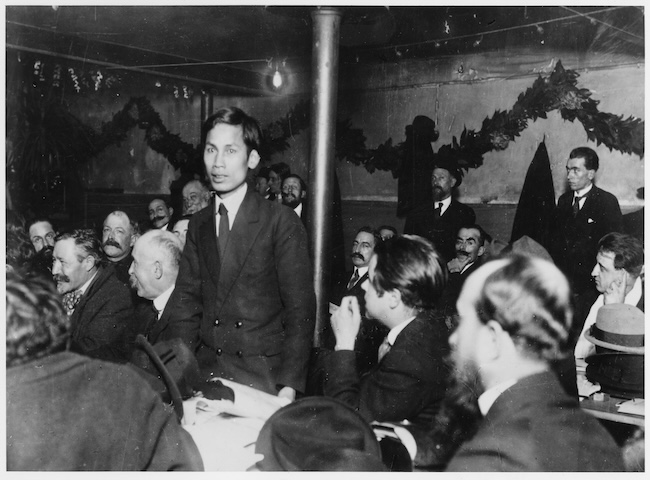
Became a Communist
In the same year, Ho fortunately read an article written by Vladimir Lenin. Lenin wrote the only way for people to liberate themselves from being colonized is the proletarian revolution, in which the working class attempts to overthrow the bourgeoisie under the leadership of a communist part.
Ho immediately saw Lenin’s thought as a crucial way to liberate the Vietnamese from the Frenchthemselves, so he decided to follow Lenin. A year later, in 1920, he became a founding member of the French Communist Party, at the age of 30.
He traveled to Moscow in 1923, then got sent back to Asia in 1924, living in China, Thailand, and Hong Kong, to develop communism. In early 1930, when in Hong Kong, Ho founded the Communist Party of Vietnam.
In 1931, he was arrested in Hong Kong and kept in prison for 2 years by the British police. After that, he went back to Moscow and lived there for the following 5 years.
Returned to China in 1938, where he heard that the French fell under the German in the early months of World War II, and the Japanese took over the colonial rule in Vietnam from the French. Ho thought that the time to liberate his country was about to come, so he planned to go back.
Back to Vietnam
On the early days of 1941, Ho Chi Minh walked across China’s border to enter North Vietnam after being away for 30 years. Based in the mountains, He formed an independence coalition called Viet Minh, and took for the first time his name Ho Chi Minh, which means: Bringer of light, and also introduced himself as an uncle, like a member of everyone’s family.
Uncle Ho traveled back to China in 1942 in the hope of getting some military aids from the communist Chinese, but he was arrested by the anti communist Chinese, Chiang Kai-shek, and kept in prison for 14 months.
Back to his mountain base in 1944, where one day he was reported that an American pilot was shot down into a jungle by Japanese, Uncle Ho then walked the pilot back to the US’s base in China, where they were known as the OSS – America’s First Intelligence Agency. Ho then got the support from the US with radios, trainings and weapons.
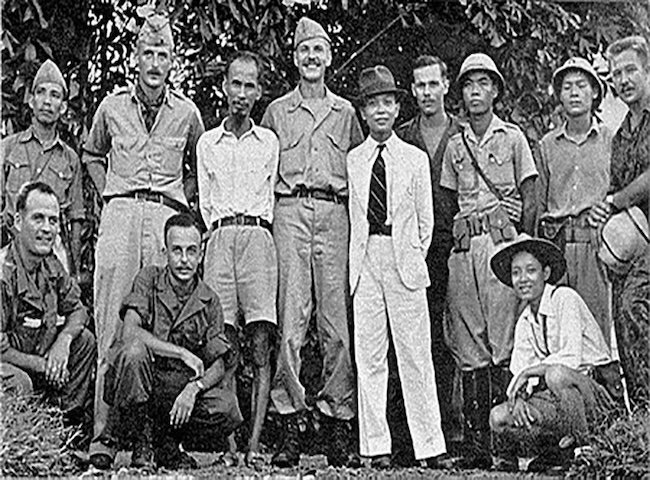
Declared Vietnam’s Independence
When Japan surrendered in Aug 1945, there was no one controlling Hanoi and many countryside areas. Ho moved quickly into the gap, and took control over the Japanese’s foot prints, then proclaimed Vietnam’s independence in early Sep that year.
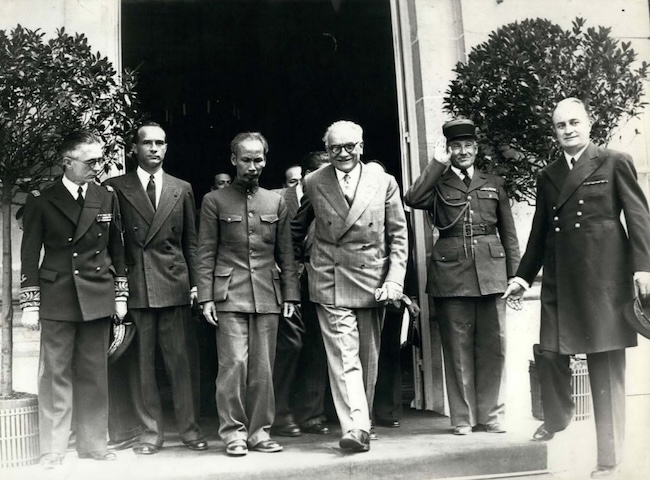
From 1946, Ho and his people fought a guerrilla war against the French to liberate the rest of the country, the fighting was also known as the First French Indochina War.
When the French was defeated in 1954, the Peace Geneva Accords divided the country in half -creating North Vietnam and South Vietnam. According to the accords, the French had to leave within 300 days, and Vietnam would be unified by a national election in 1956.
Resistance War Against America
But following the French withdraw, the US started an enormous project of nation building, they created the so-call Republic of South Vietnam, and the anti-communist Ngo Dinh Diem was chosen to be the puppet president. Diem and the US backer did not allow the election to take place.
Therefore, 80% of the people in South Vietnam fought a guerilla war against the US backed Saigon, and formed a National Liberation Front of South Vietnam, receiving the leadership and supports from the North through the Ho Chi Minh’s Trails.
Diem and the US called them Vietcong, or VC – meaning communist Vietnam, and considered them the enemy. Hence, most of the fightings during the America War took place within the border of the South. The more the US and the Republic of South Vietnam fought against the VC, the more support the North sent to the South to unify our country.
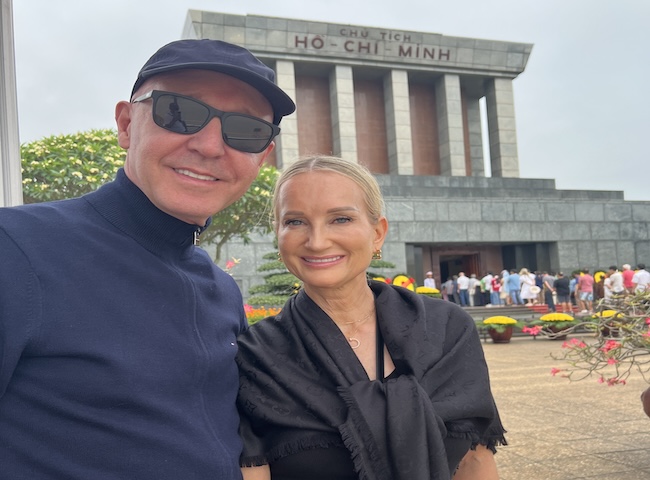
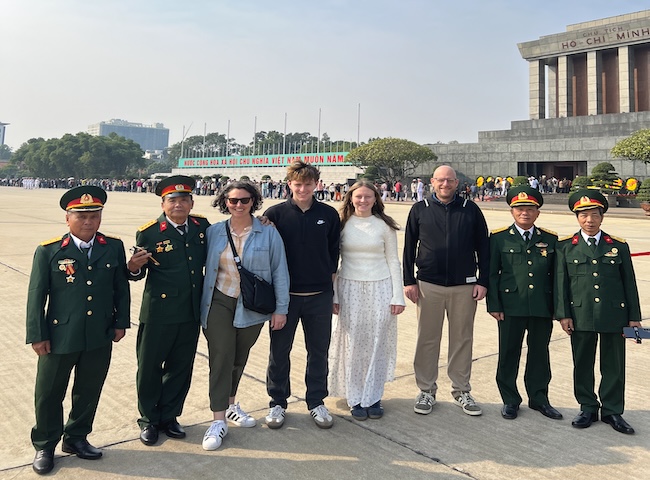
Ho Chi Minh remained the key political leader until his death in 1969, 6 years before the final Vietnamese victory. Ho wished to be cremated after death, but the Politburo had secretly decided to preserve his body since two years earlier with the help of the Soviet Unions.
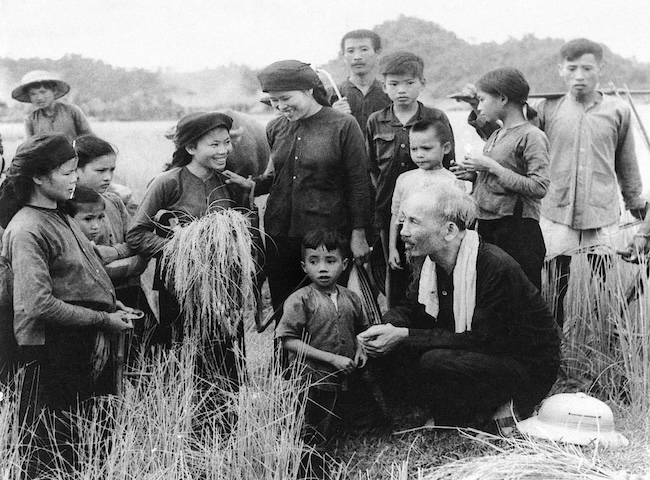
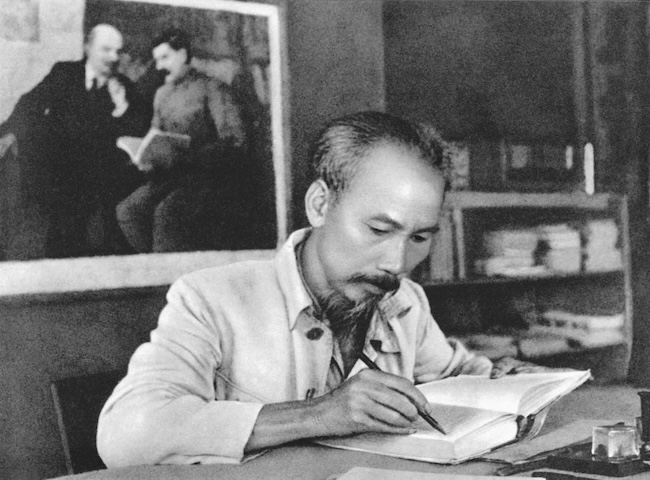
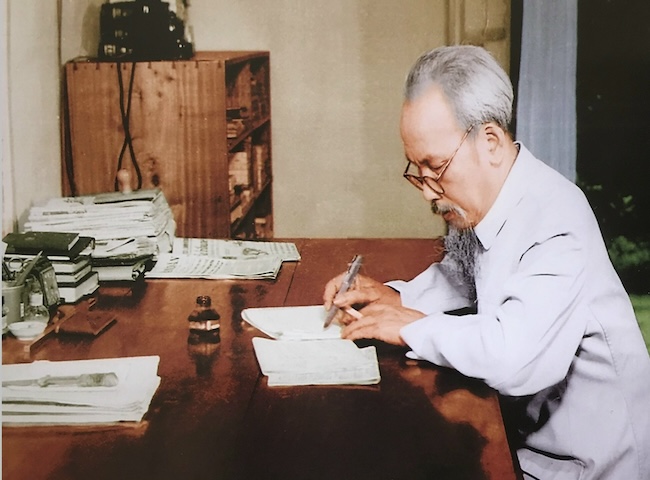
To the Vietnamese, Uncle Ho is the founding father of the mordern Vietnam, and he’s most honored for the liberation and unification of the country. He’s said to be a part of Lenin, a part of Gandhi, a part of Confucius, and all a nationalist Vietnamese.